Monday, September 7, 2015

Hazelnut Harvest


The hazelnut harvest started on August 11 this year. It is a week earlier than usual. As you can see in these pictures, each hazelnut bunch looks different because of the wide variation of plants we have.


Notice how open the husk is on this plant.


This plant tends to have mostly singles with just a few double husks.


These are wild hazelnuts picked this year from Little Yellow Stone park south of Valley City.
Notice the big juicy husk and the nut has very thick shell.


These are also wild hazelnuts from south of Leonard along the Sheyenne River.
The husk here isn't as big, but the nuts have very thick shells.


The hybrid hazelnuts that you see here are growing on our research plot in Horace.
These have a leafy husk, and the nuts are easily removed from the husk. The nuts are larger with a thin shell.


The hazelnuts here have just been picked from 3 different plants. Notice the big variations in the type of husks.


The hazelnuts here are ready to be picked, can you find all the nuts in this picture?


These hazelnuts are in the process of drying down so the husk can be removed.


This is the plant identification and size of the nut.


I use my drill with paint mixer with 2 added weights to release the nut from the dry husk.


This is the drill in action, but the cover is usually shut so that I don't get pummeled from the flying nuts.


I then use an aspiration system to separate the husks from the nuts.  The only problem I had was plugging the system up with husks if it was fed too fast. "What a pain to unplug all those tubes!" 


I've filled this tub a couple times with husks.


These are the finished cleaned nuts packed neatly in their bags with the labels.


Just a few bags to go.


Only 3 more hazelnut plants to go and this year's harvest is complete. My fingers are really tired and sore!


Friday, July 31, 2015

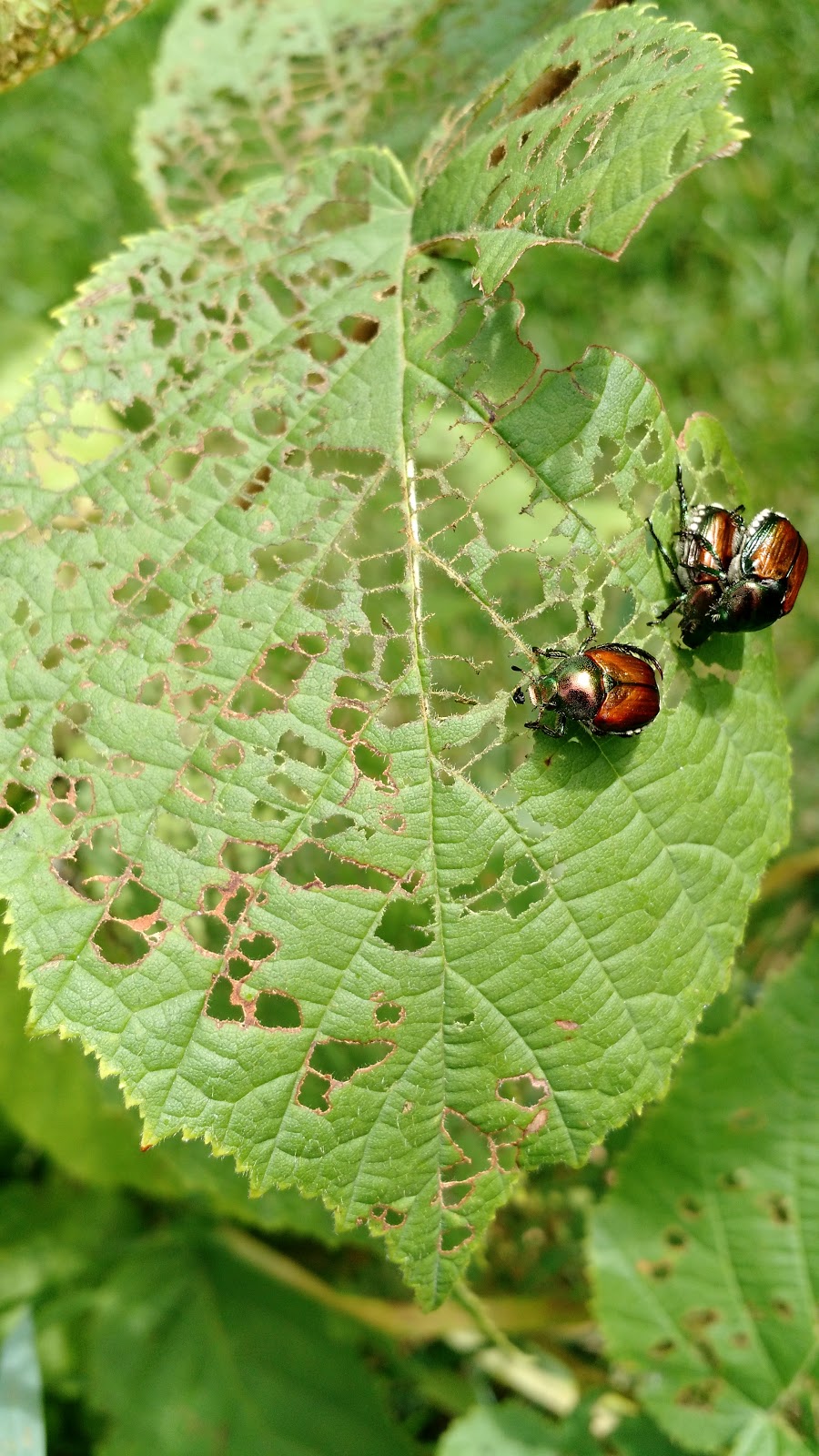
Japanese beetle on hazelnut plants


While stopping near Minneapolis at my brother's house, we saw the damage that Japanese beetles can do to the hazelnuts. These hazelnuts are seedlings from Riverbend Hazelnuts planted a couple years ago.


Make sure to keep your eye out for these beetles. We don't want them in North Dakota! 


Japanese beetles can damage many plants including raspberries as well!


Here are some Japanese beetles happily munching away on not only the leaves, but the raspberry fruits as well.

Click below for more information on Japanese beetle. 

Heavy wind damage

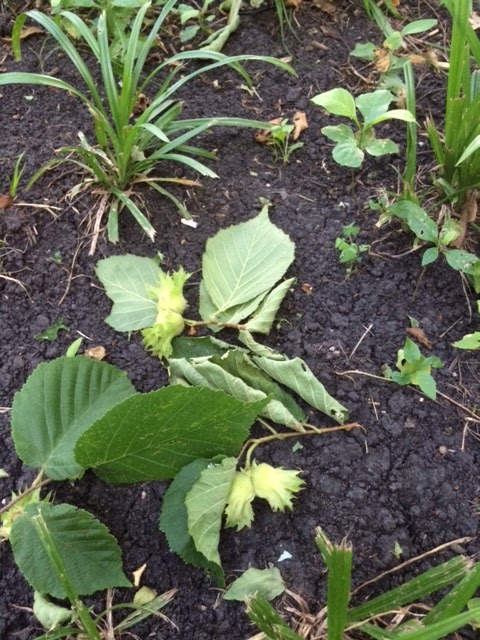
The heavy hazelnut crop this year was decimated by the 50 mph winds that blew through this week

Of course it was the larger hazelnuts that fell off in the high winds. They aren't quite ripe yet. Still another couple weeks to go.
The wind broke off some whole branches with hazelnuts on.

Wednesday, June 3, 2015

Spring Update


Planting your hazelnuts too close to the river could result in some beaver damage as shown below.


I (Dan) tried hand pollinating some of the flowers this year. First all of the catkins were removed from the branch, then a bag was placed over the flowers to keep it from getting pollinated by outside pollen. Pollen was then collected from selected plants and used to hand pollinate the female flowers. The bag was then placed over the pollinated flowers to keep unwanted pollen out. The bags were removed after the catkins dropped. 
This picture is showing the developing hazelnuts that were hand pollinated.

This is an emerging seedling that was planted this spring after stratification.

This is what they look like a week or two after emerging.


Saturday, January 31, 2015

Processing the hazelnuts

Dan made a sorter to sort the hazelnuts by size so it's easier to run through the cracker.

The sorted hazelnuts.

 Dan using the drill operated cracker.

The cracked hazelnuts.

Dan constructed an aspirator that will separate the shells from the hazelnut meats. 

The nuts and shells get sucked up through the hose, and since the shells are lighter they get sucked all the way up, while the meats fall down in to the bottom.

The cleaned hazelnut "meats." Yum!

Fall Colors

The fall colors vary from green to gold to red.


Fall/Winter Update

I'm finally posting an update about our fall harvest! Hazelnuts started to be picked starting in mid to late-August and ending by mid-September. The ripening varies because of the wide variety of plants that are planted in our "test" orchard.

 Dan collecting hazelnuts

Each bunch is picked and put in a bag.

Drying out the freshly picked hazelnuts in their husks.

After they dry out in their husks, many of the nuts will fall out of the husks when they are dry.

 Bags and bags of hazelnuts were picked.


Drying out the hazelnuts

After the nuts are separated from the husk they are continued to be dried down in mesh bags for a couple more weeks.

Lots of nuts!